


Bats
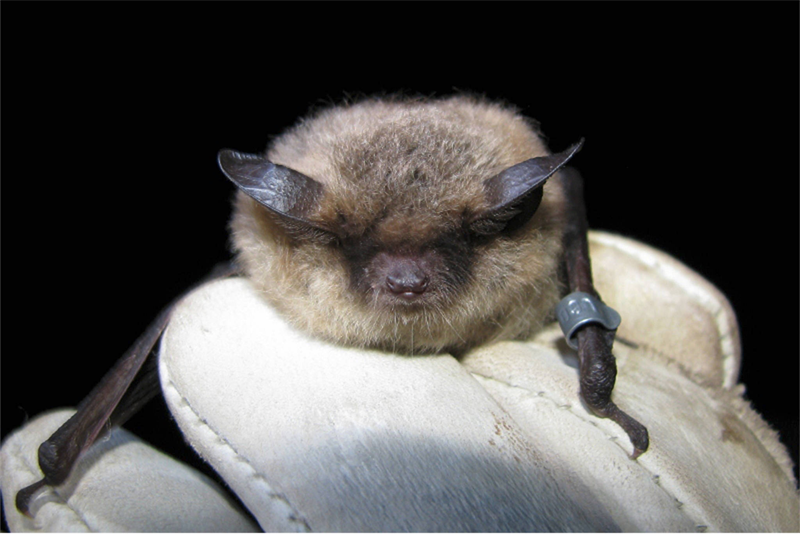 About bats
- Bats are naturally shy of humans.
- Bats are not blind, and have an excellent navigation system. This, combined with their natural aversion to humans, means that it is unlikely that they will dive at people, get tangled in long hair or attack pets, contrary to popular belief.
- Bats are an important component of our ecosystem and are beneficial to people. As insectivores, bats feed heavily on moths, flies and mosquitoes and consume forest and farm pests.
- Bats are increasingly threatened by habitat loss and white-nose syndrome.
DID YOU KNOW? A single little brown bat can eat up to 600 mosquitoes in one hour.
Bats and your pets
- Generally, having bats living nearby does not present a health risk to you or your pets.
- Bats, like cats, dogs, foxes and skunks, can have rabies, although this is rare. Bats with the rabies virus will behave unusually.
- Be extremely wary of bats that are active in the day or that seem unable to fly – they could be injured, sick or a young bat learning to fly. Although very few bats have rabies, it is always best to be cautious.
- If you see a bat behaving this way, keep children and pets away and ask to speak with a biologist at the nearest fish and wildlife office.
- Never attempt to handle bats without heavy leather gloves. Like any animal, bats will bite to defend themselves.
- The Wildlife Rescue Society of Saskatchewan has excellent information on dealing with bats.
- If there is a concern about rabies, call the Rabies Hotline at 1-800-667-7561.
- If a person is bitten by a bat, contact a physician as soon as possible.
What to do about bats on your property
- If a bat is sleeping on the outside of a building, leave it alone. It will fly away by nightfall when it wakes up to feed.
- Bats that accidently get inside the house will most likely find their way out if you leave a window or door open.
- A sleeping bat can also be captured by covering it with a large, empty coffee can (or smaller cardboard box or other similar size container) and gently sliding a piece of cardboard between the container and the surface the bat is sleeping on.
- Once a bat is trapped inside, take the container outside, remove the carboard cover and let the bat fly away.
- To give the bat a chance to fly away safely, make sure children and pets stay inside when you release it.
- If it is daytime, leave the bat in a dark area and release it at night, or place it in a tree or other sheltered area so the bat can leave on its own.
- When the bat is in mid-flight, do not attempt to capture it or to swat at it using a broom or stick. You will injure the bat.
Some bat species roost in buildings and can enter through an opening as small as 3/8 inch in diameter. Bats do not chew holes in houses, they take advantage of existing holes to enter and exit a structure. - If you have bats in a building and wish to evict them, there are several key steps to follow to ensure it is done safely and effectively.
- You will need to identify the entrance holes and plug them in the fall, after the bats have left to find hibernation sites.
- It is especially important to avoid sealing in flightless bat pups so do not plug entrances in June or July. For more information and advice, visit: Wildlife Rescue Society of Saskatchewan.
- Attempting to eradicate or physically remove bats from a building is not a solution because it is almost impossible to remove all bats, could result in death or harm to the bats and will not prevent other bats from using the roost at a later date unless all entry points are sealed. Additionally, two species that commonly roost in buildings are federally endangered and should not be disturbed.
- After the bat has vacated the building you may need to clean up the guano left behind. Dried guano becomes a powdery substance that can grow a type of fungus called Histoplasma capsulatum (although very uncommon, it is always best to be cautious). Spores from this fungus, if inhaled, can cause a lung infection called histoplasmosis. To prevent this, spray the guano with a 1:10 bleach and water solution to hold down the dust and kill the fungus, then remove the guano.
Source: https://www.alberta.ca/bats.aspx